What state is this
Between being awake and being asleep
What happens to a person when the body is almost asleep, the outside world slowly fades away, but the mind stays awake inside? Can we stay aware while deeply relaxed, right on the edge between waking and sleep? What happens to inner perception when the usual control of the mind lets go?
This is the state a yoga nidra session takes you to. Yoga nidra literally means "yogic sleep", but it is not ordinary sleep. In normal sleep the mind loses its direction and attention sinks fully into what happens inside. In yoga nidra the body moves into deep relaxation, close to sleep, while the mind keeps a certain level of awareness. The body resting, the outside world losing importance, the mind still watching: that combination is what makes this practice so interesting, and why it can never be fully understood from a description.
- A short preparation first: special exercises so the body can truly let go. Then you lie down, close your eyes and listen
- A guided journey through the body, the breath, the senses and the inner space of the mind
- The same state some fields call deep trance, others "non-sleep deep rest"; in yoga it has been called yoga nidra for centuries
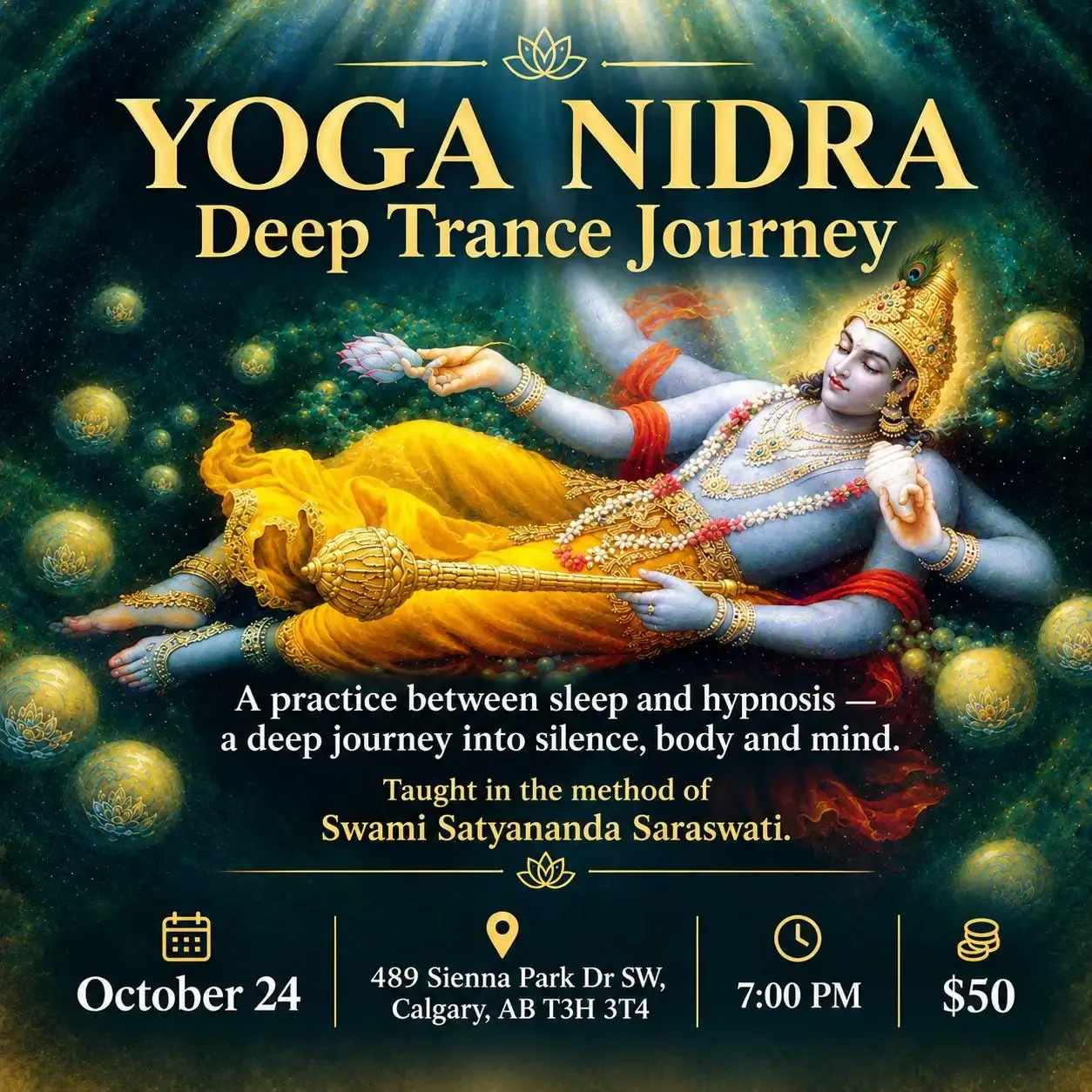
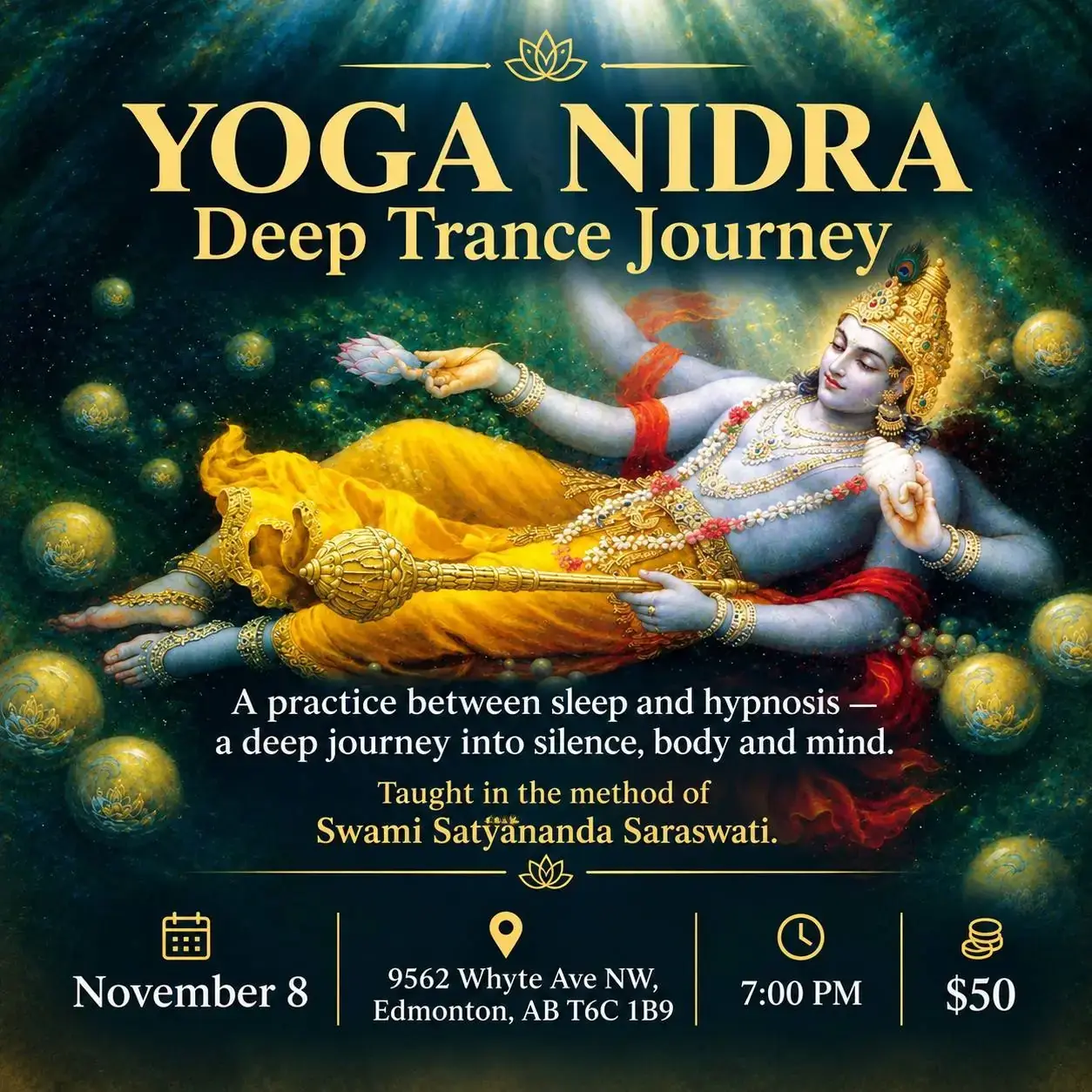
Come and feel it yourself · Edmonton, Nov 8 →
Where the modern method comes fromThe modern system of yoga nidra is closely connected to the name of Swami Satyananda Saraswati. In the ashram of his teacher, Swami Sivananda, in Rishikesh, he used to keep watch at night near a school where students studied Sanskrit. After his night shift he would fall asleep, and in the morning the students would begin chanting Vedic mantras. He never studied those texts and never tried to memorise them. Later, awake, when he heard the same mantras, he realised he knew them. Something he had never learned consciously had entered his mind while he slept.
That experience pushed him to study the nature of sleep, perception and awareness, and the idea that a person can take in information even while asleep. Ideas about yogic sleep are much older and appear in ancient yogic and tantric texts; Satyananda organised them into one clear, step-by-step practice, the yoga nidra taught in this class.