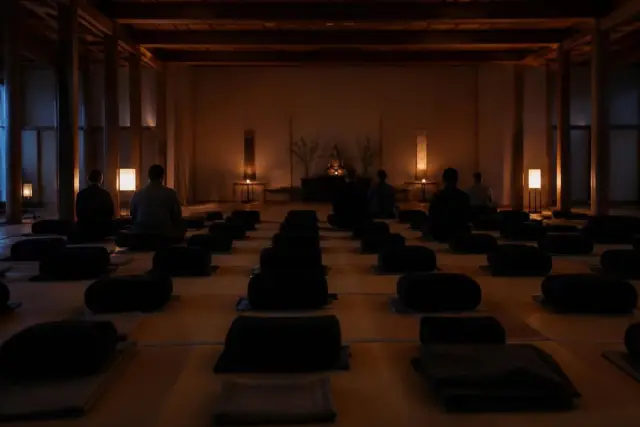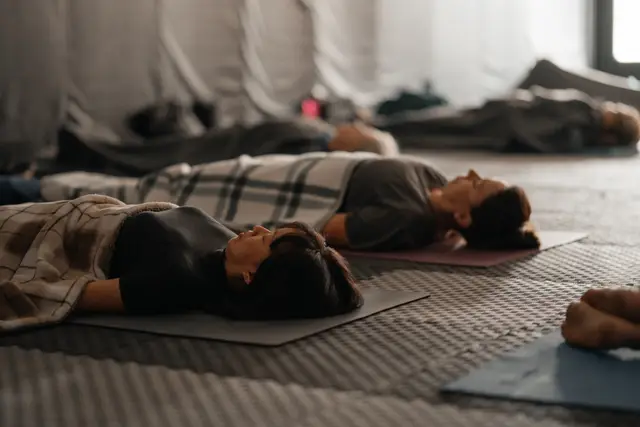

Vipassana is one of the oldest meditation techniques in the world. The word means "insight" or "clear seeing" in Pali, and the practice is exactly that: observing your breath, body sensations, and thoughts as they actually are, without reacting to them. Over time, this trains the mind to stay calm and clear in situations that would normally trigger stress, craving, or aversion.
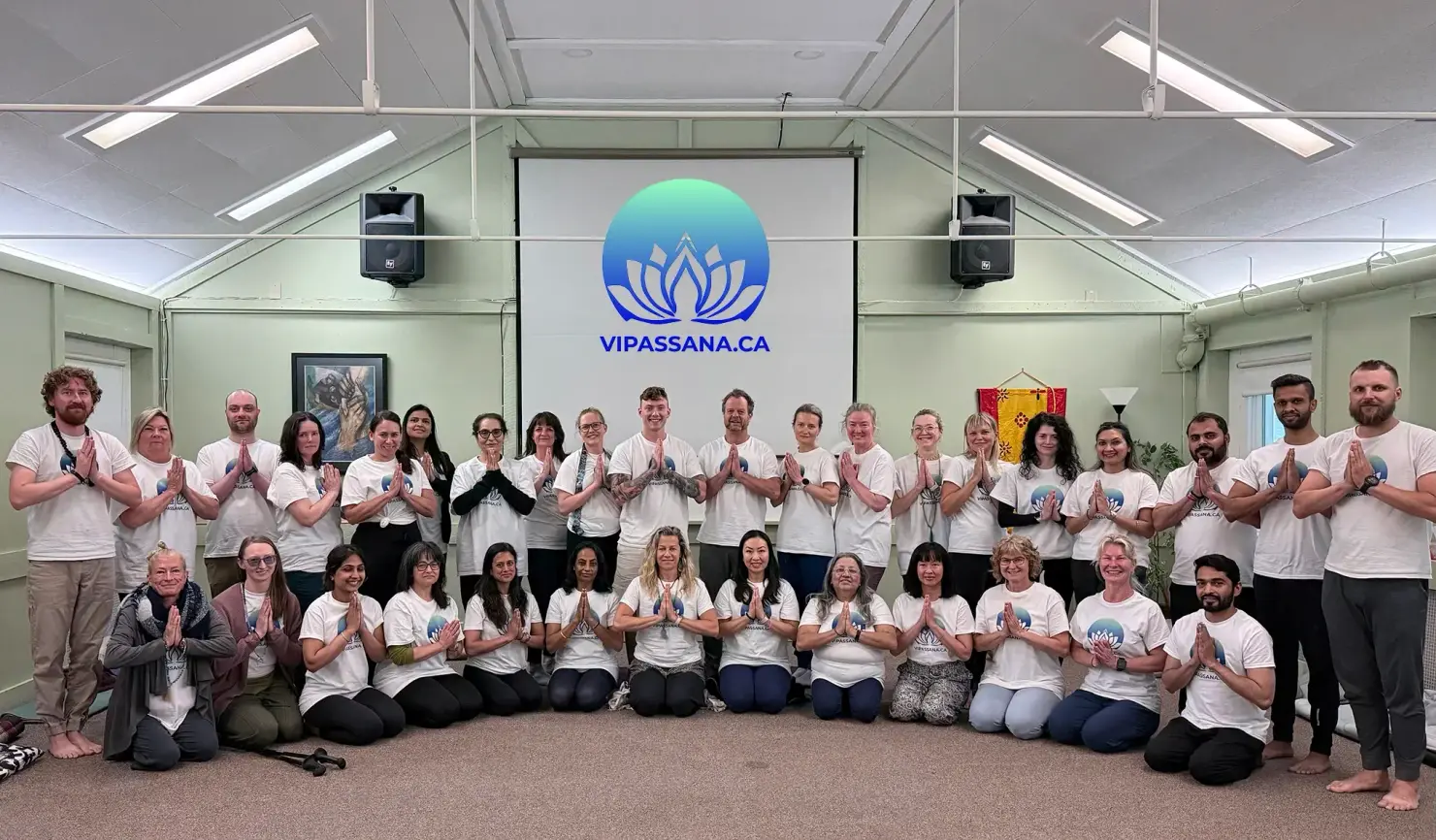
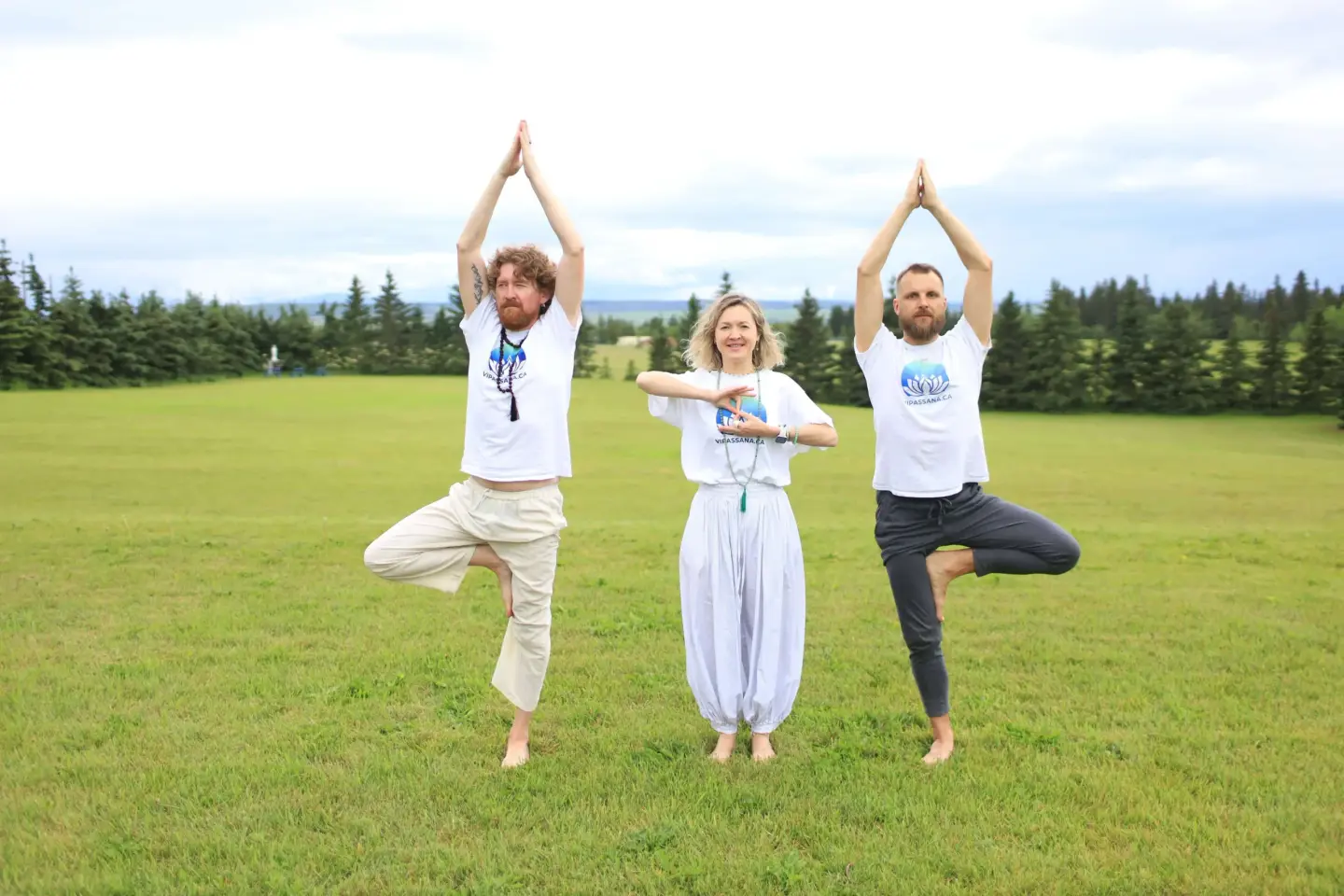
We're Artem and Valerii, and we've been teaching Vipassana at monthly 3-day silent retreats across Alberta for the past two years. Before that, each of us completed multiple 10-day Goenka courses and dozens of shorter retreats, first in Ukraine, Europe, and now in Canada, and we continue studying with our teachers in India and Ukraine. In this guide, we'll explain what Vipassana is, how the technique works step by step, what the research says about its benefits, and how to decide whether a 10-day course or a weekend retreat is the right way to start.
What Does Vipassana Mean?
Vipassana (विपश्यना) is a Pali word usually translated as "insight" or "seeing things as they really are." It refers to both a specific meditation technique and the quality of mind the technique develops: a direct, non-reactive awareness of your own experience.
It helps to understand what Vipassana is not:
- It's not concentration meditation (samatha). Concentration practices train the mind to rest on a single object — a mantra, a candle flame, the breath. Vipassana uses concentration as a foundation, but its goal is different: to observe whatever arises in the body and mind and see its changing nature.
- It's not quite the same as "mindfulness." Modern mindfulness programs like MBSR grew out of Vipassana, but they're typically secular, shorter, and focused on stress relief. Vipassana is the older, deeper root practice — and it asks more of you.
- It's not a religion. The technique comes from the teachings of the Buddha, but it doesn't require belief, conversion, or ritual. People of every background — and none — practice it.
A Short History of Vipassana
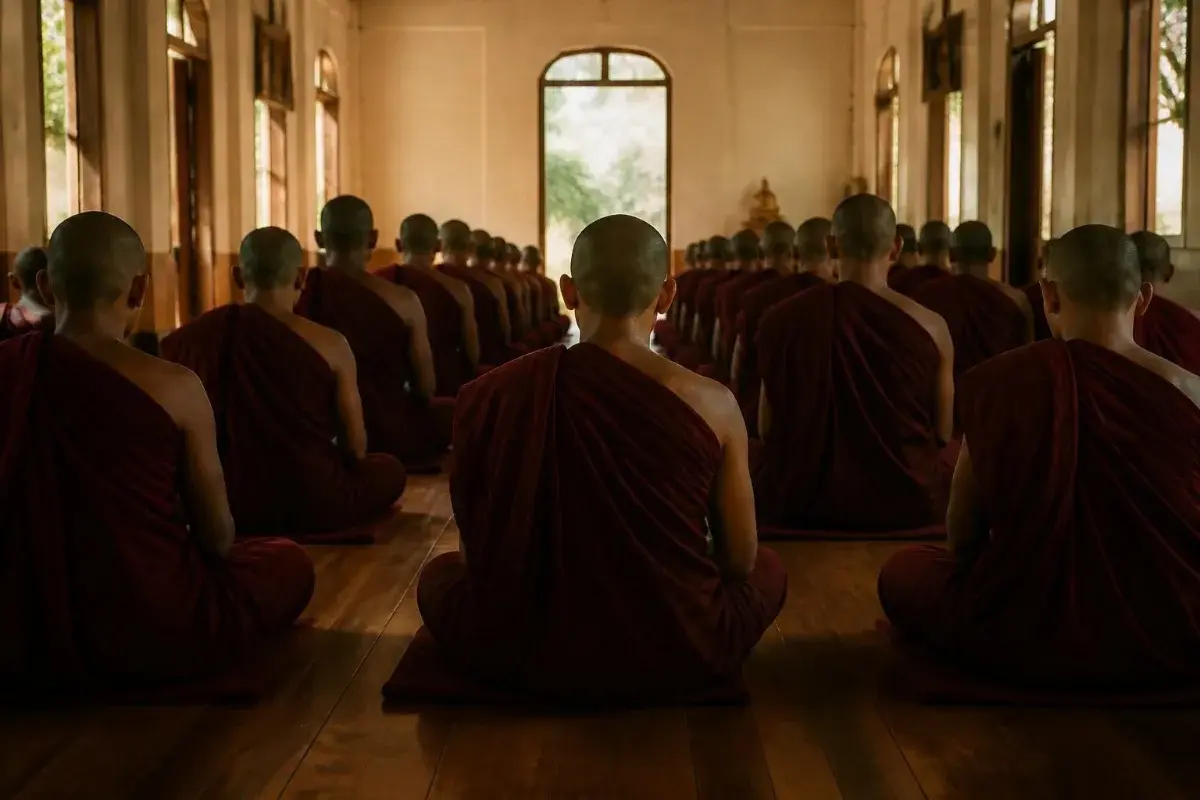
The Buddha taught Vipassana in northern India around 2,500 years ago as a universal method for ending suffering. Over the centuries, the living practice faded in India but was preserved in the Theravada monasteries of Burma (Myanmar), Sri Lanka, and Thailand. Two Burmese lineages brought it back to the world in the 20th century. The scholar-monk Ledi Sayadaw began teaching meditation to laypeople, a line that continued through Sayagyi U Ba Khin and his student S.N. Goenka, whose 10-day residential courses spread the technique globally from the 1970s onward. In parallel, Mahasi Sayadaw developed a systematic "noting" method that became the foundation of the insight meditation movement in the West. Our own teaching draws primarily on the Mahasi tradition, combined with practices we've learned from our teachers in India — you'll see how that looks in practice below.
How Vipassana Works: The Technique
Whatever the lineage, Vipassana practice follows the same arc: calm the mind first, then observe.
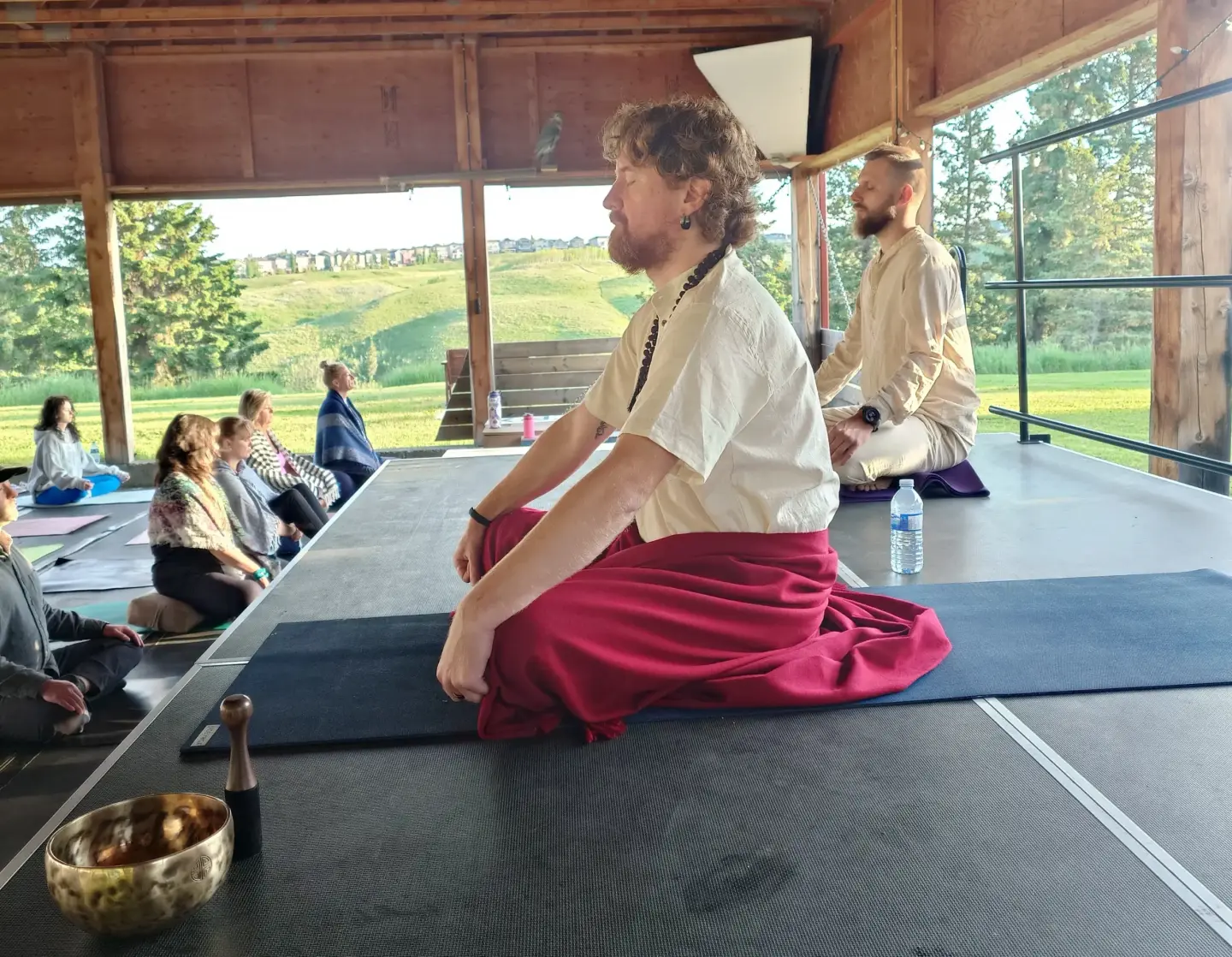
Settle and concentrate (Anapanasati). You begin by sitting still and resting attention on the natural breath — the sensation of air at the nostrils or the rise and fall of the abdomen. You don't control the breath; you watch it. This may sound trivial. It isn't. Most beginners discover within two minutes that the mind has wandered off. That discovery is the practice: notice the wandering, and return to the breath. Each return strengthens attention.
Observe whatever arises. Once attention is steadier, you widen the field. Thoughts, emotions, sounds, and body sensations — tingling, warmth, pressure, pain — become the objects of observation. In the Mahasi method we teach, you softly "note" each experience as it appears: thinking, thinking… itching… hearing… The note keeps you an observer instead of a participant.
Develop equanimity. This is the heart of Vipassana. As you observe, you notice that every sensation — pleasant or painful — arises and passes away. Nothing stays. Experiencing this impermanence directly (not as an idea, but in your own knees at minute forty) slowly rewires the habit of grasping at what's pleasant and fighting what isn't. The mind learns to stay balanced.
There's no visualization, no mantra as the main object, no special breathing. The simplicity is the point — and the difficulty.
How to Practice Vipassana at Home
You don't need a retreat to begin. Here's the routine we recommend to newcomers:
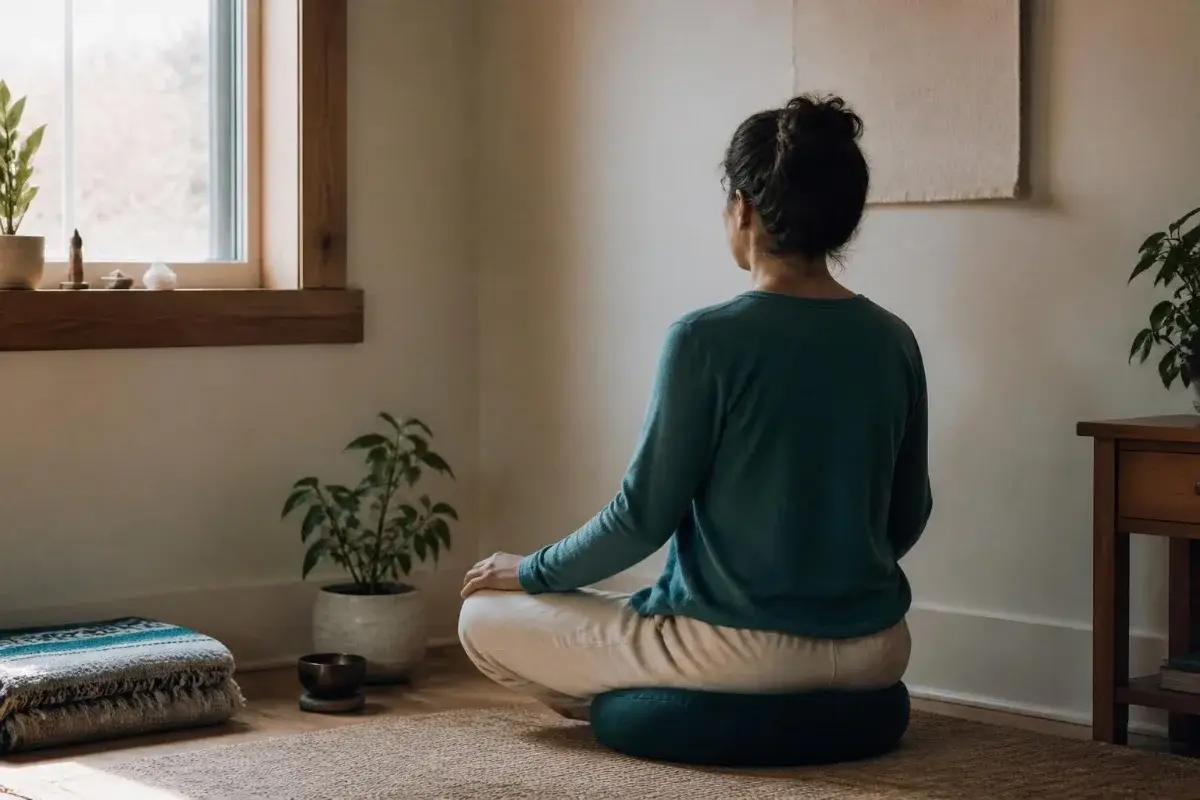
- Pick a consistent time and place. Early morning works best — the mind is quieter and the day hasn't claimed you yet. A corner with a cushion is enough.
- Sit comfortably but alert. Cross-legged on a cushion or upright on a chair. The spine straight, hands resting, eyes closed.
- Start with 10–15 minutes of breath awareness. Attention on the breath at the nostrils or abdomen. When the mind wanders — and it will — note it gently and come back.
- Add noting after a week or two. Begin acknowledging sensations and thoughts as they arise, then returning to the breath as your anchor.
- Build to 30–45 minutes daily. Consistency beats duration. Fifteen minutes every day does more than two hours once a week.
If you want a more detailed walkthrough, see our step-by-step guide to starting meditation at home.
What Are the Benefits of Vipassana? (What Research Shows)
Vipassana makes big claims — inner peace, freedom from suffering — but a growing body of research supports more measurable effects:
- Lower stress and anxiety. A study of 10-day Vipassana retreat participants found significant reductions in subjective stress and increases in well-being that persisted six months later (Szekeres & Wertheim, 2015).
- Improved emotional regulation. Vipassana practice has been associated with better heart-rate variability and mood — physiological markers of a nervous system that recovers from stress faster (Krygier et al., 2013).
- Reduced substance use and cravings. A trial with an incarcerated population found Vipassana courses decreased alcohol and drug use after release (Bowen et al., 2006).
- Sharper attention and cognitive flexibility. Meditation training in insight traditions is linked to improvements in sustained attention and the ability to shift mental sets — the skill of not getting stuck in one loop of thinking.
What we see at our retreats matches the research, with one addition the papers rarely mention: energy. Participants consistently tell us that three days of silence, practice, and rest generate a reserve of physical and mental energy they then carry into work, family, and creative projects. When all external inputs — phone, conversations, news — are switched off, the energy that usually leaks into them accumulates instead.
Is Vipassana Right for You? Honest Challenges
Vipassana is simple, not easy. A few things newcomers should know:
- The first day is the hardest. Sitting still hurts at first, and a mind used to constant stimulation protests loudly. At our retreats, we watch this resolve almost on schedule: what feels impossible on Friday feels natural by Sunday morning. If you don't have a stable yoga or meditation practice, expect the body to complain on day one — and expect it to be noticeably easier by days two and three.
- Silence is easier than you think. The most common fear before a first retreat — "I can't stay silent for three days" — is the one participants laugh about afterwards. When everyone around you is silent and the environment is built for it, silence stops being an effort and becomes a relief.
- Strong emotions can surface. When distractions are removed, whatever you've been postponing — grief, anger, old memories — may come up. This is normal and, with guidance, productive. It's also why we recommend learning the technique at a guided retreat rather than alone. If you have an acute mental health condition, talk to your doctor first and read our meditation safety guidelines.
- It's a practice, not a pill. One retreat gives you the technique and a felt experience of what's possible. The benefits compound with daily practice afterwards.
Vipassana Retreats: 10-Day Courses vs. Weekend Retreats
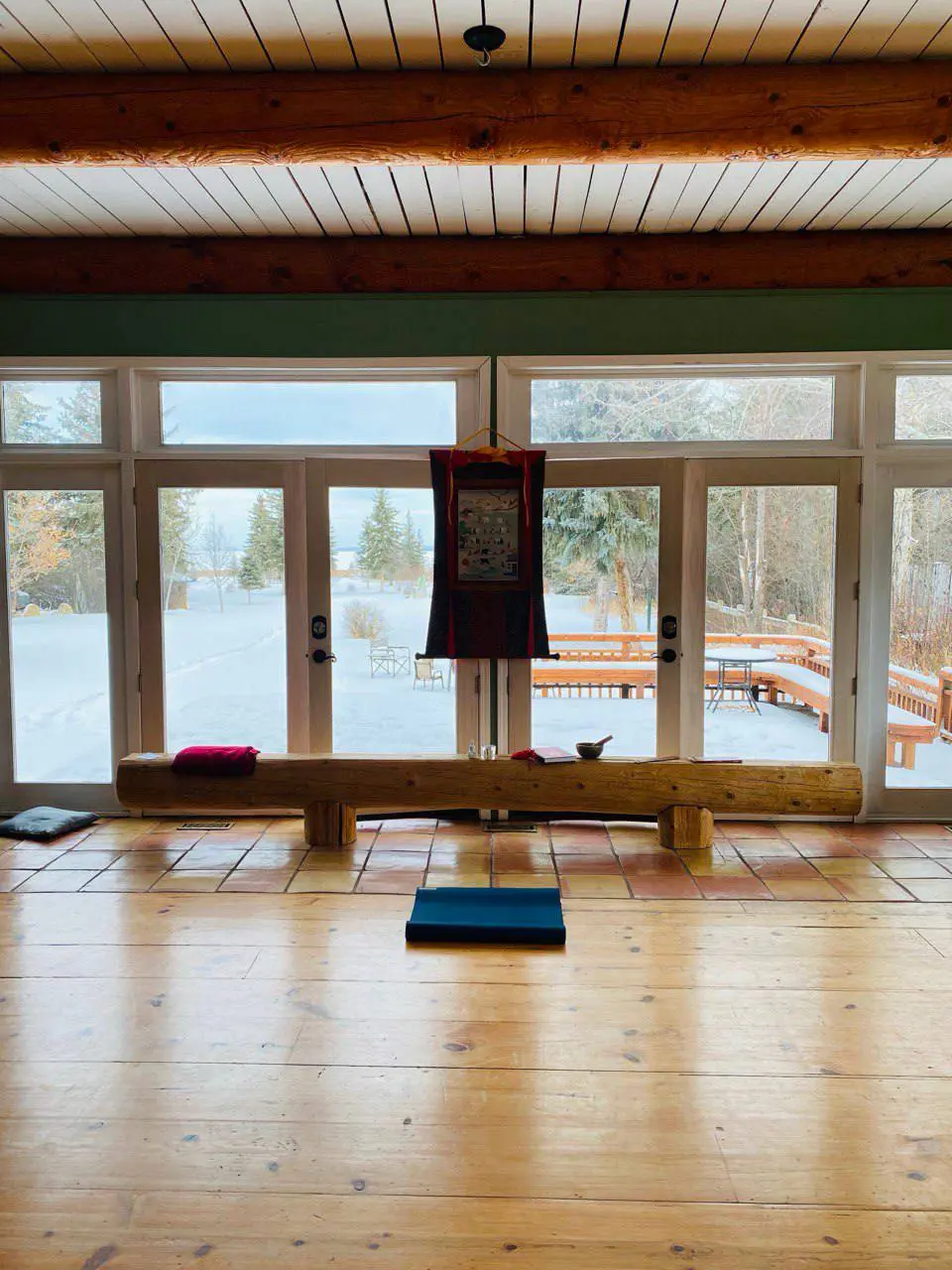
The classic way to learn Vipassana is a 10-day residential course in the Goenka tradition: complete silence, around ten hours of meditation a day, no reading or writing, funded by donations. We've each completed several, and we recommend the experience — it's transformative. But it demands ten-plus days away from work and family, and the intensity overwhelms some first-timers. Many people postpone meditation for years because the only format they know feels out of reach. That's why we run 3-day silent Vipassana retreats — a complete, self-contained immersion designed to fit into a long weekend. It's not a compressed 10-day course; it's a different format with the same core: noble silence from start to finish, no gadgets, guided meditation, and a rhythm that alternates sitting practice with movement so the body can handle it.
What a Weekend at Our Retreat Looks Like
We hold a retreat every month. Our home base is Gull Lake, an intimate setting limited to 10 participants; as demand has grown, we've added the Mount St. Francis Retreat Centre in Cochrane, which hosts up to 30. Organized transfer is available from Calgary and Edmonton.
Retreat Schedule
Three days of noble silence, meditation, yoga, and nature
Thursday · Arrival · Silence begins
| Time | Activity |
|---|---|
| Evening | Arrival & introductions (Introduction to Vipassana practice · Om chanting) |
Friday & Saturday · Full practice days
| Time | Activity |
|---|---|
| 5:30 AM | Wake up |
| 6:00 – 6:30 AM | Tibetan prostrations |
| 6:40 – 7:40 AM | Anapanasati meditation |
| 7:50 – 8:50 AM | Hatha yoga |
| 9:10 – 10:00 AM | Free time |
| 10:00 – 11:00 AM | Breakfast (Vegetarian, well-balanced) |
| 11:00 AM – 1:00 PM | Walking meditation & nature walk |
| 1:30 – 3:00 PM | Hatha yoga & pranayama |
| 3:00 – 5:00 PM | Rest & spiritual reading |
| 5:00 – 6:00 PM | Dinner |
| 6:00 – 7:30 PM | Meditation or walk |
| 7:30 – 9:00 PM | Evening walk |
| 9:00 – 10:00 PM | Om mantra & Savasana |
Sunday · Closing day
| Time | Activity |
|---|---|
| 5:30 AM | Wake up |
| 6:00 – 6:30 AM | Tibetan prostrations |
| 6:40 – 7:40 AM | Anapanasati meditation |
| 7:50 – 8:50 AM | Hatha yoga |
| 9:10 – 10:00 AM | Free time |
| 10:00 – 11:00 AM | Breakfast |
| 11:00 AM – 12:00 PM | Closing of silence & sharing reflections |
| 12:00 PM | Departure |
Alongside sitting meditation, the program includes practices from our teachers' traditions: pranayama and kriya yoga, sound healing, and sadhu board (nail-standing) practice for those who want to try it. Meals are vegetarian, two per day, and consistently one of the most-praised parts of the retreat — participants who eat meat at home regularly tell us the food alone convinced them to experiment with vegetarian cooking afterwards. You can read and watch what past participants say on our reviews page. The themes repeat: silence turned out to be the easy part, the practices are simple enough to continue at home, and the sense of meeting yourself — perhaps for the first time, with every external input switched off — stays long after the weekend ends. Ready to experience it? See upcoming dates for our 3-day silent meditation retreat.
Frequently Asked Questions
Is Vipassana Buddhist or Hindu?
Vipassana comes from the teachings of the Buddha and was preserved in Theravada Buddhist countries, so its roots are Buddhist. But the technique itself is non-sectarian: it involves observing breath and sensation, not worship or belief. People of all religions — and no religion — practice it without conflict.
Is Vipassana suitable for beginners?
Yes. Vipassana is often the first technique people learn, precisely because it's systematic and doesn't assume prior experience. A guided retreat is the easiest entry point: the structure, the silence, and the teacher's support do a lot of the work. Complete beginners at our retreats typically find day one challenging and day three surprisingly natural.
What are the five precepts of Vipassana?
During retreats, practitioners follow five ethical commitments: to abstain from killing, stealing, sexual misconduct, false speech, and intoxicants. These aren't moral tests — they exist because a mind free of agitation and regret settles into meditation far more easily.
How long should I meditate each day?
Start with 10–15 minutes daily and build toward 30–45 minutes and more. Daily consistency matters more than length: a short sit every morning develops the skill faster than occasional long sessions.
Can you really learn Vipassana in 3 days?
You can learn the technique and experience its effects — deep quiet, energy, a first real look at your own mind. Three days won't take you as deep as ten, and we're upfront about that. Think of it as a complete first immersion that leaves you with practices you can continue at home, rather than a shortcut through the 10-day course.
What is noble silence?
Noble silence means refraining from speech, eye contact, gestures, and devices for the duration of the retreat. It sounds intimidating; in practice it's liberating. With no social performance required, attention turns fully inward — which is exactly the condition Vipassana needs.

Valerii Bandurko
Co-founder & retreat coordinator · Vipassana.ca
Yoga entered Valerii’s life through back pain about eight years ago; of all the practices he explored since, Vipassana is the one that stayed. He never planned to teach, but after a one-day retreat with Artem in 2024 he became a certified yoga instructor (Yoga Alliance, International Yoga Federation), and now leads the one-day retreat in Calgary and, together with Artem, the 3-day silent retreats at Gull Lake and Mount St. Francis.