
Ayurveda body types, called doshas, are the three patterns that Ayurveda, the traditional medical system of India, uses to describe how a person is built and how they tend to go out of balance. Vata is the pattern of movement (air and space), Pitta the pattern of transformation (fire and water), and Kapha the pattern of structure (earth and water). Everyone has all three; what makes you you, in Ayurvedic terms, is the proportion you were born with. That proportion is your constitution, or prakriti, and it is what a dosha quiz is trying to estimate.
I teach yoga, and Ayurveda is yoga's sister science: the two grew up together in the same texts and share a vocabulary. I do not practise Ayurveda as medicine, and this article is not medical advice. What I find useful in the doshas, after years of watching people on mats and in retreat halls, is that they describe real tendencies with unusual precision: why one person in the room is cold and restless, another is running hot and impatient, and a third is calm, steady, and slightly hard to get moving. Knowing your type will not diagnose anything. It will tell you which way you tend to drift, and what pulls you back.
What Is a Dosha?
The word dosha literally means "that which can go wrong", which tells you something about how Ayurveda thinks. The doshas are not body parts or fluids; they are functional principles, the three jobs any living body has to do. Something has to move (breath, nerve impulses, blood, thought): that is Vata. Something has to transform (digest food, regulate temperature, process experience): that is Pitta. Something has to hold it all together (tissue, fluid, immunity, memory): that is Kapha.
Ayurveda builds these from the five elements (pancha mahabhuta): space, air, fire, water, and earth. The elements are not chemistry; they are qualities. Air is light, dry, mobile. Fire is hot and sharp. Earth is heavy and stable. Each dosha is a pair of elements, and inherits their qualities, and this is the whole key to the system: once you know a dosha's qualities, you know what increases it (more of the same) and what calms it (the opposite).
The classical description is in the Charaka Samhita, a text compiled roughly two thousand years ago and still the foundation of Ayurvedic training. The idea that constitutions are real, stable traits has drawn some modern scientific interest: a 2008 study in the Journal of Translational Medicine found that people classified into extreme Vata, Pitta, and Kapha types showed distinct gene-expression and biochemical profiles, and a 2015 genome-wide study in Scientific Reports reported that the three groups clustered genetically. These are small, early studies, and they do not validate Ayurvedic treatments. They do suggest the categories are describing something.
The Three Doshas at a Glance
| Vata | Pitta | Kapha | |
|---|---|---|---|
| Elements | Air + space | Fire + water | Earth + water |
| Governs | Movement, nerves, breath, elimination | Digestion, metabolism, heat, intellect | Structure, fluids, immunity, stability |
| Qualities | Dry, light, cold, rough, mobile, subtle | Hot, sharp, light, oily, liquid, spreading | Heavy, slow, cool, oily, smooth, dense, stable |
| Body | Thin, light frame; cold hands and feet; dry skin; variable appetite | Medium, athletic build; warm; fair or reddish skin; strong appetite | Solid, sturdy frame; smooth cool skin; thick hair; steady appetite |
| Mind | Quick, creative, restless; learns fast, forgets fast | Sharp, focused, decisive; competitive | Calm, patient, loyal; learns slowly, remembers long |
| Out of balance | Anxiety, insomnia, constipation, dryness, scattered attention | Irritability, heartburn, inflammation, rashes, burnout | Lethargy, weight gain, congestion, low motivation, attachment |
| Balanced by | Warmth, routine, oil, grounding | Coolness, moderation, calm, sweetness | Movement, lightness, warmth, stimulation |
| Season · Time of day | Autumn, early winter · 2–6 am/pm | Summer · 10 am–2 pm, 10 pm–2 am | Late winter, spring · 6–10 am/pm |
Vata Dosha: Air and Space
Vata is the dosha of movement, and Vata-dominant people move: they talk with their hands, change their minds, start projects, walk fast, and think in leaps. Physically they tend to be light, with a slender or long frame, prominent joints, dry skin and hair, and hands and feet that are always cold. Appetite and sleep are irregular. Energy comes in bursts and runs out suddenly.
In balance, Vata is the most creative and adaptable of the three: quick to learn, enthusiastic, communicative, alive to new ideas. Out of balance, all that movement turns inward. The classic signs of Vata dosha excess are anxiety and worry, difficulty falling or staying asleep, constipation and bloating, dry skin, a racing mind, and a feeling of being ungrounded and overwhelmed. Vata is aggravated by cold, wind, irregular hours, travel, too much stimulation, raw and dry food, and skipped meals. It rises naturally in autumn, in the small hours of the night, and in old age.
Vata is balanced by everything it lacks: warmth, moisture, weight, and rhythm. Warm cooked food, regular mealtimes and bedtimes, oil (sesame oil massage, abhyanga, is the classic Vata remedy), gentle grounding exercise, and, above all, routine.
Pitta Dosha: Fire and Water
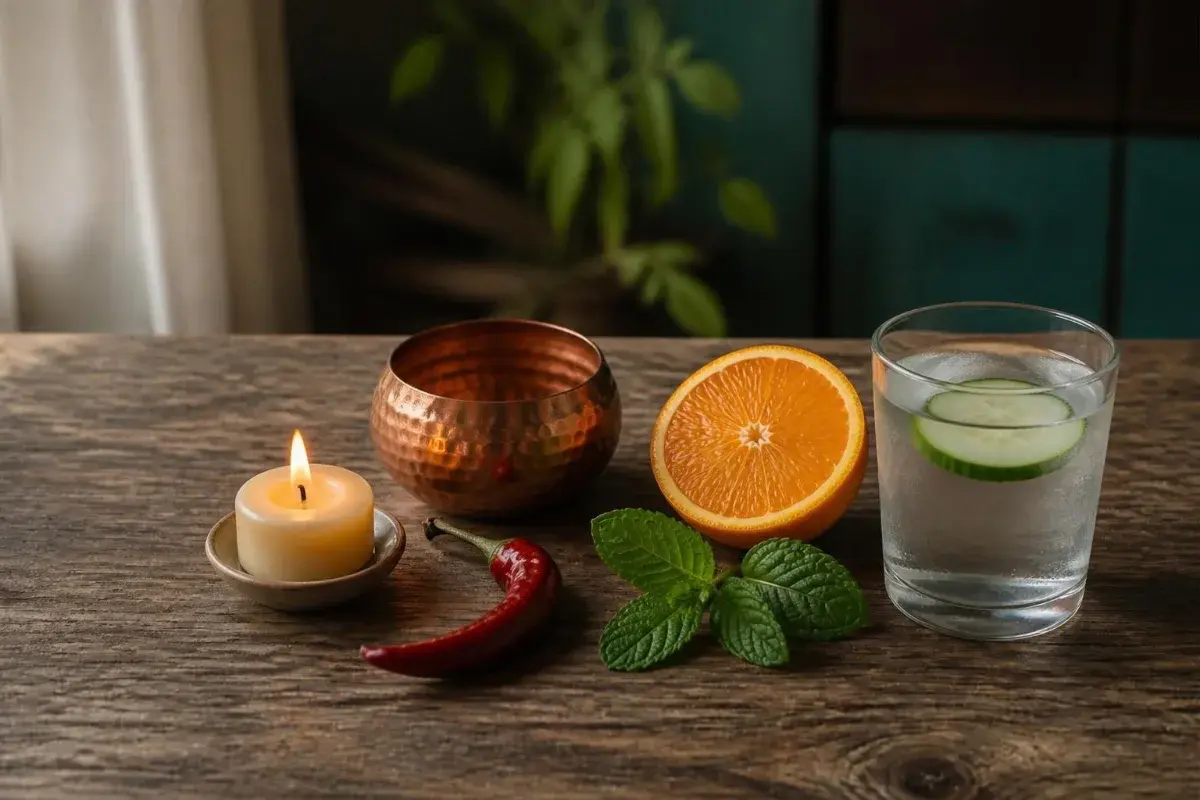
Pitta is transformation, and Pitta-dominant people run hot in every sense. They are usually of medium build, muscular, with warm skin that flushes or freckles easily, often fair or reddish hair, and a strong appetite and digestion; a missed meal makes them irritable fast. They are sharp, organised, ambitious, and articulate, and they are usually the ones running the meeting.
In balance, Pitta gives clarity, courage, focus, and a good digestion of both food and ideas. Out of balance, the fire spreads. Signs of Pitta dosha excess are irritability and impatience, criticism (of others and of oneself), heartburn and acid reflux, inflammation, skin rashes or acne, excessive sweating, and the particular burnout of someone who cannot stop pushing. Pitta is aggravated by heat, sun, spicy and sour food, alcohol, competition, and overwork. It peaks in summer, around midday, and in the middle years of life.
Pitta is balanced by cooling and softening: cool (not cold) food, sweet and bitter tastes, time in nature and near water, moderation in work, and practices that are deliberately non-competitive. The hardest instruction for a Pitta person is "do less, and do it more gently"; it is also the one that works.
Kapha Dosha: Earth and Water
Kapha is structure, and Kapha-dominant people are built for endurance: a solid, well-proportioned frame, strong bones and joints, thick hair, smooth and often oily skin, a slow and steady digestion, and deep, heavy sleep. Temperamentally they are the calmest people in the room: patient, affectionate, loyal, slow to anger and slow to change.
In balance, Kapha is strength, stability, compassion, and a long memory. Out of balance, the earth gets too heavy. Signs of Kapha dosha excess are lethargy and oversleeping, weight gain, congestion and sinus trouble, water retention, low motivation, and an attachment to comfort, people, and habits that makes change feel impossible. Kapha is aggravated by cold damp weather, heavy and sweet food, dairy, daytime sleep, and inactivity. It rises in late winter and spring, in the early morning and early evening, and in childhood.
Kapha is balanced by movement and lightness: vigorous exercise, especially in the morning; lighter, warmer, spicier food; new experiences; getting up early; and dry warmth (a sauna is a Kapha person's friend). The instruction that works is the opposite of Pitta's: "do more, and start now".
Dual Doshas: Vata-Pitta, Pitta-Kapha, Vata-Kapha
Pure single-dosha constitutions are uncommon. Most people are a dual type, with two doshas close together and the third clearly lower. Ayurveda names the leading dosha first.
Vata-Pitta (or Pitta-Vata) is the type of the quick, driven, creative person who runs hot and light: fast thinking, fast talking, fast metabolism, prone to both anxiety and irritability, and to burning out from doing too much too enthusiastically. This type needs the grounding of Vata care and the cooling of Pitta care, and usually needs to be told to slow down twice.
Pitta-Kapha is often the most physically robust constitution: the strength and endurance of Kapha with the drive and appetite of Pitta. Athletes are often here. Out of balance it shows as inflammation plus heaviness (skin problems, weight gain, stubbornness with a temper). Regular vigorous exercise and a moderate, not-too-rich diet keep it steady.
Vata-Kapha is the least intuitive pairing, because its two doshas are both cold but otherwise opposite: light and heavy, mobile and still. People of this type often feel cold, alternate between restlessness and inertia, and find their digestion delicate. Warmth is the common remedy for both halves, so warm food, warm environments, and steady gentle movement suit this type better than either extreme.
A tridoshic constitution, with all three roughly equal, is rare and considered fortunate; such people are stable but, when they do go out of balance, need careful assessment to see which dosha is involved.
Dosha Symbols, Colours, and Qualities
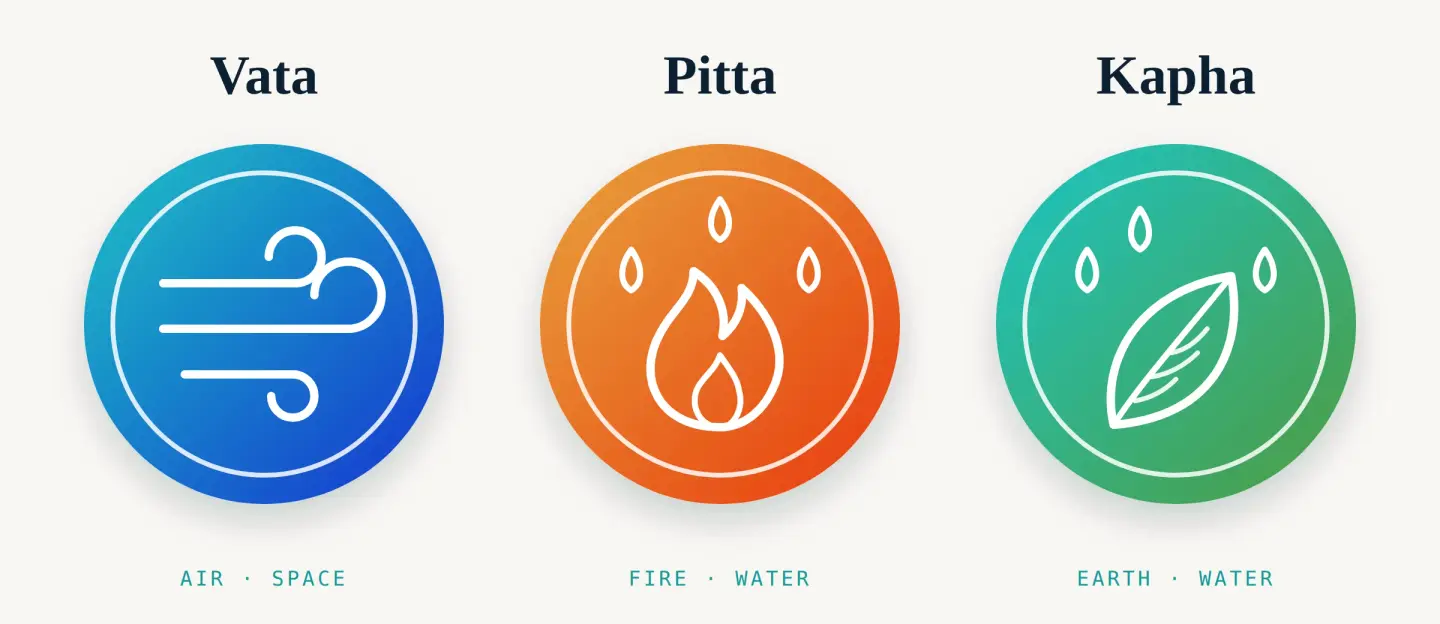
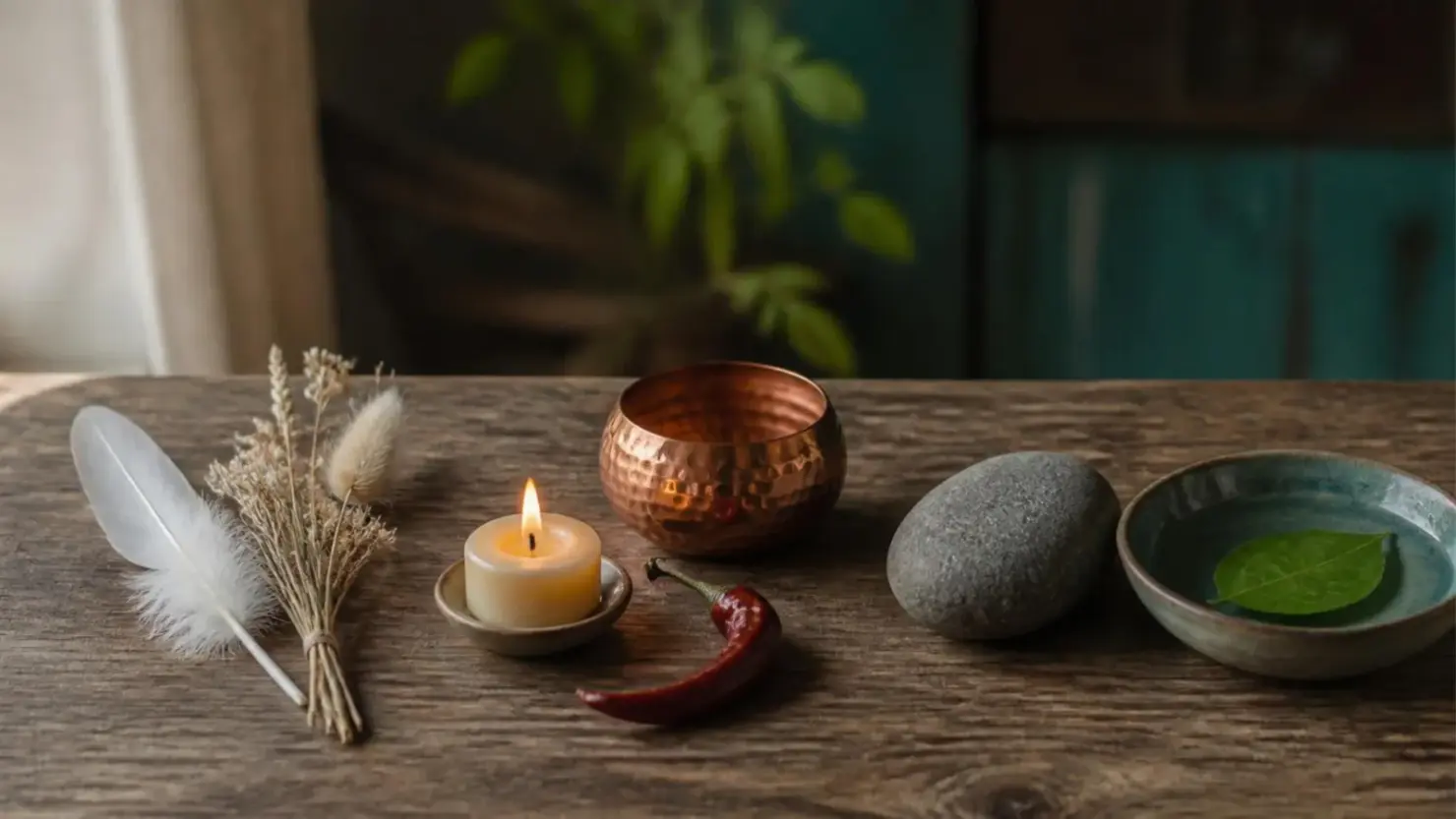
Ayurveda's classical texts do not use pictorial symbols for the doshas; the icons you see today are modern conventions, but they are consistent and they help. Vata is drawn as wind, a feather, or a spiral of air, in pale blues, greys, and violets, the colours of sky and space. Pitta is a flame or the sun, in red, orange, and gold. Kapha is a drop of water, a wave, or a mountain, in greens, deep blues, and earth browns.
The colours that represent a dosha and the colours that balance it are opposites, which sometimes confuses people. The balancing colours follow the same "opposites" logic as everything else in Ayurveda: a Vata person, cold and airy, is calmed by warm colours (gold, orange, soft yellow, earthy red); a Pitta person, hot, is cooled by blue, green, white, and silver; a Kapha person, heavy and slow, is lifted by bright, stimulating colours (red, orange, bright yellow). This is a small thing, but it reaches into clothing, rooms, and the lighting of a yoga hall, and it is one of the reasons our retreat spaces lean toward warm, muted tones.
| Vata | Pitta | Kapha | |
|---|---|---|---|
| Common symbol | Wind, feather, spiral | Flame, sun | Water drop, wave, mountain |
| Represents | Air and space; movement | Fire; transformation | Earth and water; structure |
| Colours that represent it | Pale blue, grey, violet | Red, orange, gold | Green, deep blue, brown |
| Colours that balance it | Warm: gold, orange, earthy red | Cool: blue, green, white, silver | Bright: red, orange, yellow |
| Taste that balances it | Sweet, sour, salty | Sweet, bitter, astringent | Pungent, bitter, astringent |
Dosha Quiz: Which Dosha Am I?
Answer the fifteen questions below by choosing the description that fits you most of your life, not just this month; that is the difference between constitution and current state. The column with the most answers is your leading dosha; if two columns are close, you are a dual type. This is a self-assessment, not a diagnosis; it is what a practitioner would ask in the first five minutes, before they took your pulse.
Prakriti and Vikriti: Your Type vs. Your Current State
The distinction most quick quizzes skip is the one that makes Ayurveda usable. Prakriti is the constitution you were born with; it does not change. Vikriti is your state right now, and it changes with the season, your age, what you have been eating, how you have been sleeping, and what stress has been doing to you. A Kapha person who has spent a cold, windy autumn travelling, eating on the run, and sleeping badly will show Vata symptoms: anxiety, dryness, insomnia. The right response is to calm Vata, not to "be more Kapha".
This is why the quiz asks about your whole life rather than this month, and why the best question to ask when something is off is not "what is my dosha?" but "which dosha is aggravated right now?" The symptom lists in the three sections above are the answer key: the dosha whose imbalance signs you recognise is the one to work on, whatever your constitution.
How to Balance Your Dosha: Food, Routine, Yoga, and Meditation
One rule generates all of Ayurveda's advice: like increases like, and opposites bring balance. A cold, dry, mobile dosha is calmed by warmth, oil, and stillness; a hot, sharp one by coolness and softness; a heavy, slow one by lightness and movement. Everything below is that rule applied.
Daily routine (dinacharya). Ayurveda puts more weight on rhythm than on any single food or practice. Waking before sunrise (in the Vata hours, when the mind is light), eating the main meal at midday when Pitta and digestion are strongest, and being in bed before the second Pitta window at 10 pm suits all three types; Vata needs the routine most, Kapha needs the early rising most, and Pitta needs the early bedtime most.
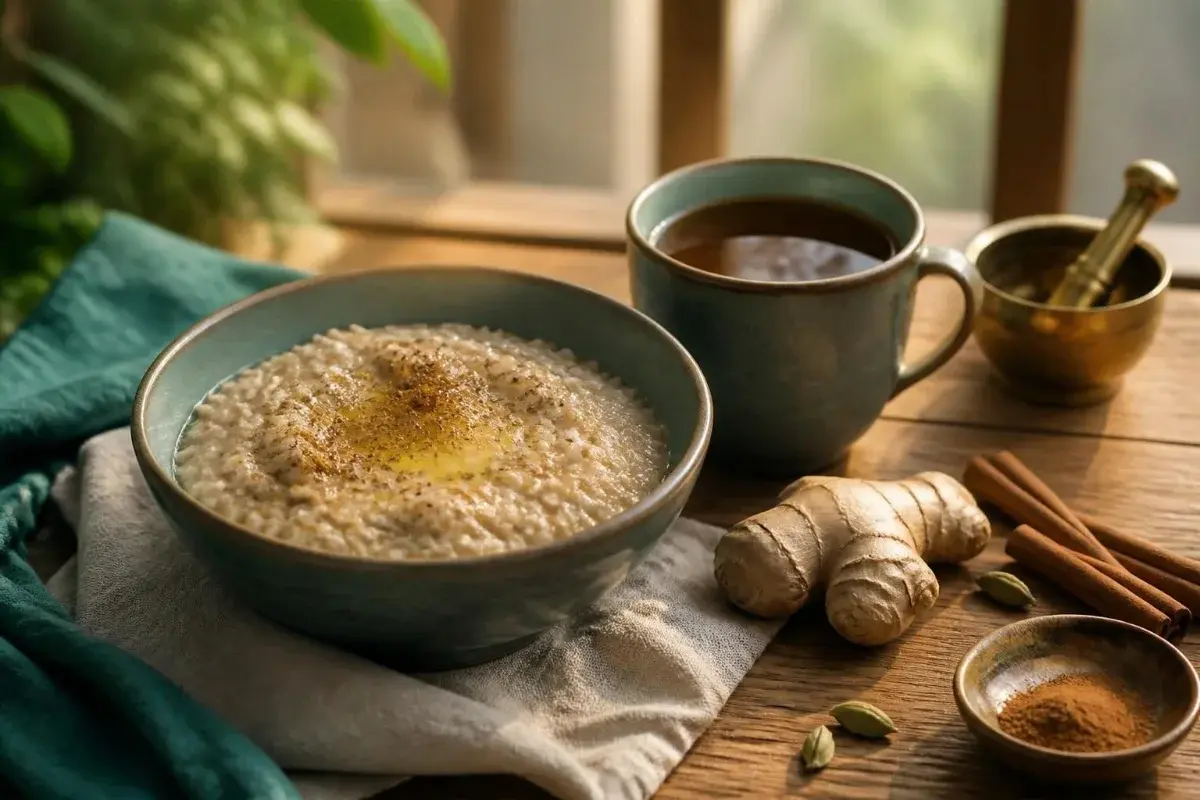
Food. Vata: warm, cooked, moist, moderately oily food, eaten at regular times; soups, stews, cooked grains, warm milk with spices; fewer raw salads, crackers, and cold drinks. Pitta: cool, sweet, and bitter food; grains, sweet fruit, greens, coconut, ghee; less chilli, sour fruit, alcohol, and fried food. Kapha: light, warm, dry, spicy food; legumes, vegetables, honey, ginger and black pepper; less dairy, wheat, sugar, and cold or fried food.
Yoga. The same principle sorts a yoga practice. A Vata practice is slow, warm, and grounding: long holds, forward bends, hip openers, and a long savasana; nothing that leaves you more scattered than you started. A Pitta practice is cooling and non-competitive: moon salutations rather than sun salutations, twists, forward folds, and the deliberate choice not to push to the edge. A Kapha practice is the vigorous one: sun salutations, standing poses, backbends, and an early start, because Kapha loves a warm bed. In our yoga classes in Calgary and Edmonton I try to build each session with all three in the room, which usually means a strong middle and a long, quiet end.
Meditation. Vata minds are the restless ones, and they do better with a body-based anchor than with open awareness: a body scan, breath counting, or yoga nidra, in short sittings, often. Pitta minds meditate well but turn it into a project; loving-kindness practice, and the instruction to sit without a goal, are the correctives. Kapha minds settle easily and drift toward sleep; upright posture, a morning slot, walking meditation, and sound (this is one reason a sound bath works so well for the sleepy end of the room) keep them present. If you are new to any of this, start with our beginner's guide to meditation and adjust from there.
What the Doshas Can and Cannot Tell You
Ayurveda is a traditional system, not an evidence-based medicine, and the doshas are a model, not a measurement. Used well, the model is a good observer of tendencies: it will tell you why you crash in autumn, why you get short-tempered when lunch is late, or why you can never get out of bed in February, and it will point you toward the plain adjustments (warmth, coolness, movement) that help. Used badly, it becomes a horoscope, or a reason to take herbal preparations of unknown content; the U.S. National Center for Complementary and Integrative Health notes that some Ayurvedic products have been found to contain lead and other heavy metals, and that Ayurvedic treatments should not replace conventional care. Take the self-knowledge; be careful with the pharmacy.
Where the doshas earn their place, in my experience, is in the yoga hall and on the cushion. A teacher who can see that the anxious person needs grounding, the intense person needs permission to ease off, and the steady person needs a nudge, teaches better. That is a two-thousand-year-old observation, and it still holds.
Practise With Your Type, Not Against It
You can read your dosha in an afternoon. Learning what balance actually feels like in the body takes a room, a teacher, and some silence. Our one-day retreat in Calgary and Edmonton combines yoga, guided meditation, and a sound journey in a single day, which is enough to feel each of the three doshas in yourself and to notice which one is running the show. The three-day silent retreat at Mount St. Francis goes further: three days of routine, warm food at regular hours, and stillness is, as it happens, a near-perfect Vata-calming prescription, and most people leave it more grounded than they have felt in years.

Frequently Asked Questions
What are the three Ayurveda body types?
Vata (air and space: light, dry, mobile, creative, prone to anxiety), Pitta (fire and water: warm, sharp, driven, prone to irritability and inflammation), and Kapha (earth and water: solid, steady, calm, prone to heaviness and lethargy). Everyone has all three in a unique proportion, which is their constitution or prakriti.
How do I know which dosha I am?
Look at lifelong tendencies rather than your current state: body frame, skin, appetite, sleep, energy, and how you react to stress. The quiz in this article covers the fifteen questions a practitioner would ask first. If two doshas score close together, you are a dual type. A trained Ayurvedic practitioner confirms it with pulse and history.
What is a dosha, in simple terms?
A dosha is one of the three functional patterns Ayurveda uses to describe a body: movement (Vata), transformation (Pitta), and structure (Kapha). Each is built from two of the five elements and inherits their qualities, so a dosha is increased by things that share its qualities and calmed by their opposites.
Can your dosha change?
Your constitution (prakriti) is fixed for life. Your current state (vikriti) changes constantly with season, age, diet, sleep, and stress, and it is the current state you work on. Vata naturally rises in autumn and old age, Pitta in summer and midlife, Kapha in spring and childhood.
What is a Vata-Kapha dosha?
A dual constitution in which Vata and Kapha are close and Pitta is low. The two share coldness but are otherwise opposites (light versus heavy, mobile versus still), so people of this type often feel cold, swing between restlessness and inertia, and have delicate digestion. Warmth, in food and environment, balances both halves.
What are the dosha symbols and colours?
Modern convention draws Vata as wind or a feather in pale blues and greys, Pitta as a flame or sun in reds and golds, and Kapha as a water drop, wave, or mountain in greens and earth tones. The colours that balance each dosha are the opposite: warm tones for Vata, cool tones for Pitta, bright stimulating tones for Kapha.
Which dosha contributes to stability and cohesion?
Kapha. Built from earth and water, it governs structure, fluids, lubrication, immunity, and memory, and it is what holds the body and the mind together. In excess it becomes heaviness and attachment; in balance it is strength, patience, and calm.
Is Ayurveda scientifically proven?
Ayurveda as a whole is a traditional system, not an evidence-based medicine, and its treatments should not replace conventional care. A few small studies have found genetic and biochemical differences between people classified as extreme Vata, Pitta, and Kapha types, which suggests the categories describe real tendencies, but this does not validate specific remedies. Use the doshas for self-knowledge and lifestyle; be cautious with herbal products.

Artem Rusinov
Founder & lead instructor · Vipassana.ca
Artem is a certified yoga instructor and a member of the International Yoga Federation and Yoga Alliance. He trained in music before coming to meditation, and leads the yoga, meditation and sound healing sessions at Vipassana.ca’s one-day and three-day retreats in Calgary and Edmonton.
- Charaka Samhita, Sutrasthana (trans. Sharma PV). Chaukhambha Orientalia, Varanasi. Classical foundation of the tridosha theory.
- Lad V. Ayurveda: The Science of Self-Healing. Lotus Press, 1984.
- Prasher B, Negi S, Aggarwal S, et al. Whole genome expression and biochemical correlates of extreme constitutional types defined in Ayurveda. Journal of Translational Medicine. 2008;6:48. doi:10.1186/1479-5876-6-48
- Govindaraj P, Nizamuddin S, Sharath A, et al. Genome-wide analysis correlates Ayurveda Prakriti. Scientific Reports. 2015;5:15786. doi:10.1038/srep15786
- National Center for Complementary and Integrative Health. Ayurvedic Medicine: In Depth. https://www.nccih.nih.gov/health/ayurvedic-medicine-in-depth