Yoga Nidra in Calgary & Edmonton
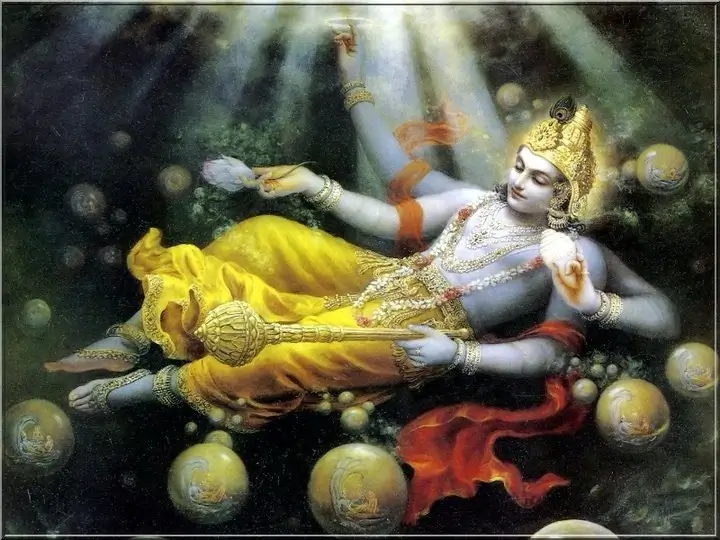
Yoga Nidra: Deep Trance Journey
A guided yoga nidra class, in person, taught in the classical method of Swami Satyananda Saraswati. A practice between sleep and hypnosis: the body rests as if asleep, the outside world fades, and the mind stays awake inside. One evening, lying down, about two hours. No experience needed.
Beginners welcome · Lying down the whole time · Small group · Bring your own mat and blanket
Upcoming yoga nidra sessions
Yoga nidra classes in Calgary and Edmonton this autumn
Both evenings follow the same programme: doors open at 7:00 PM, we start at 7:15 PM and finish by 9:00 PM. If you have been looking for yoga nidra near you in Alberta, these are the two in-person sessions we run this autumn. Places are limited so that everyone has room to lie down comfortably, so early registration is recommended.
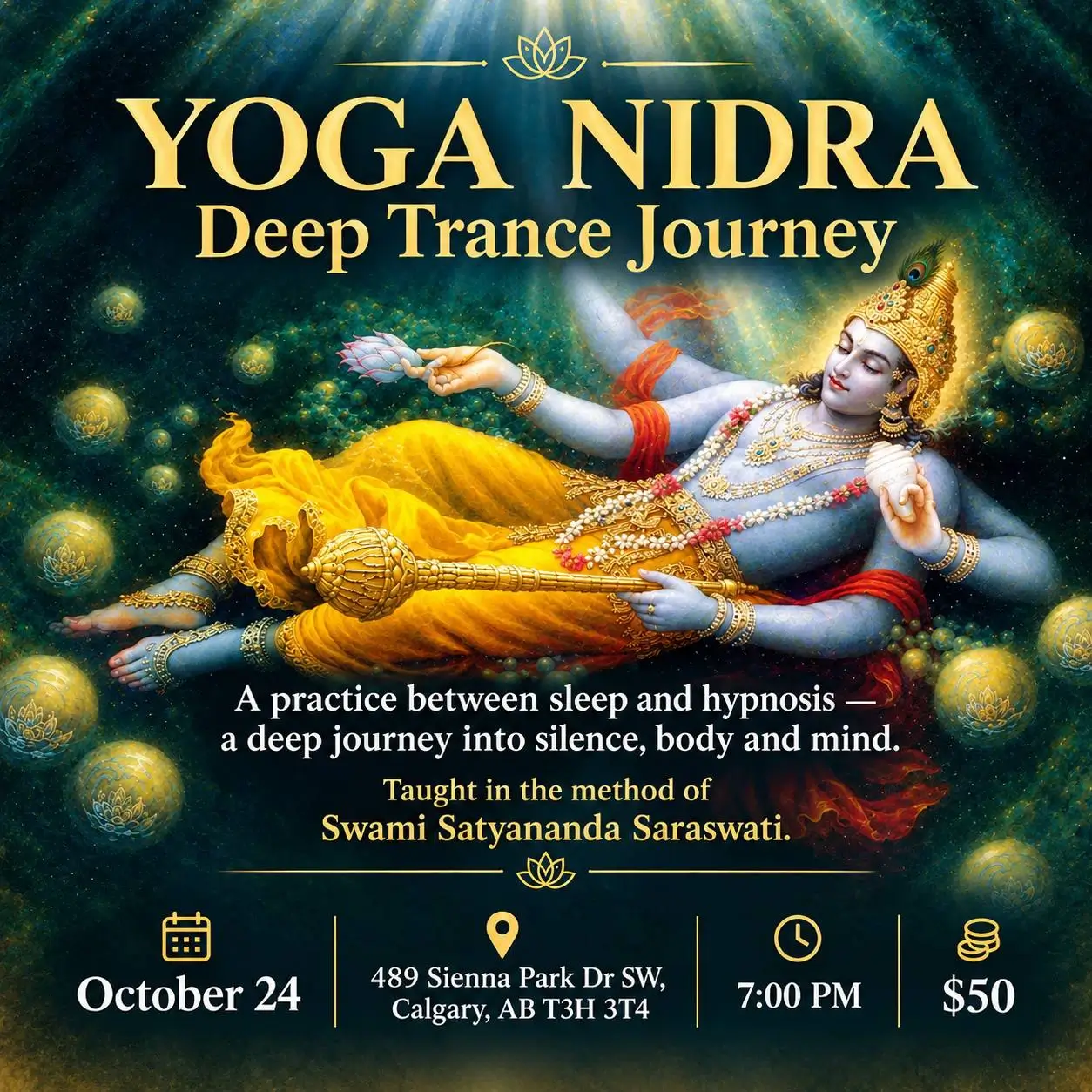
Calgary, AB T3H 3T4
The first yoga nidra class in Calgary in the full Satyananda form. Bring your own mat and blanket; we prepare the body with special exercises before the practice itself.
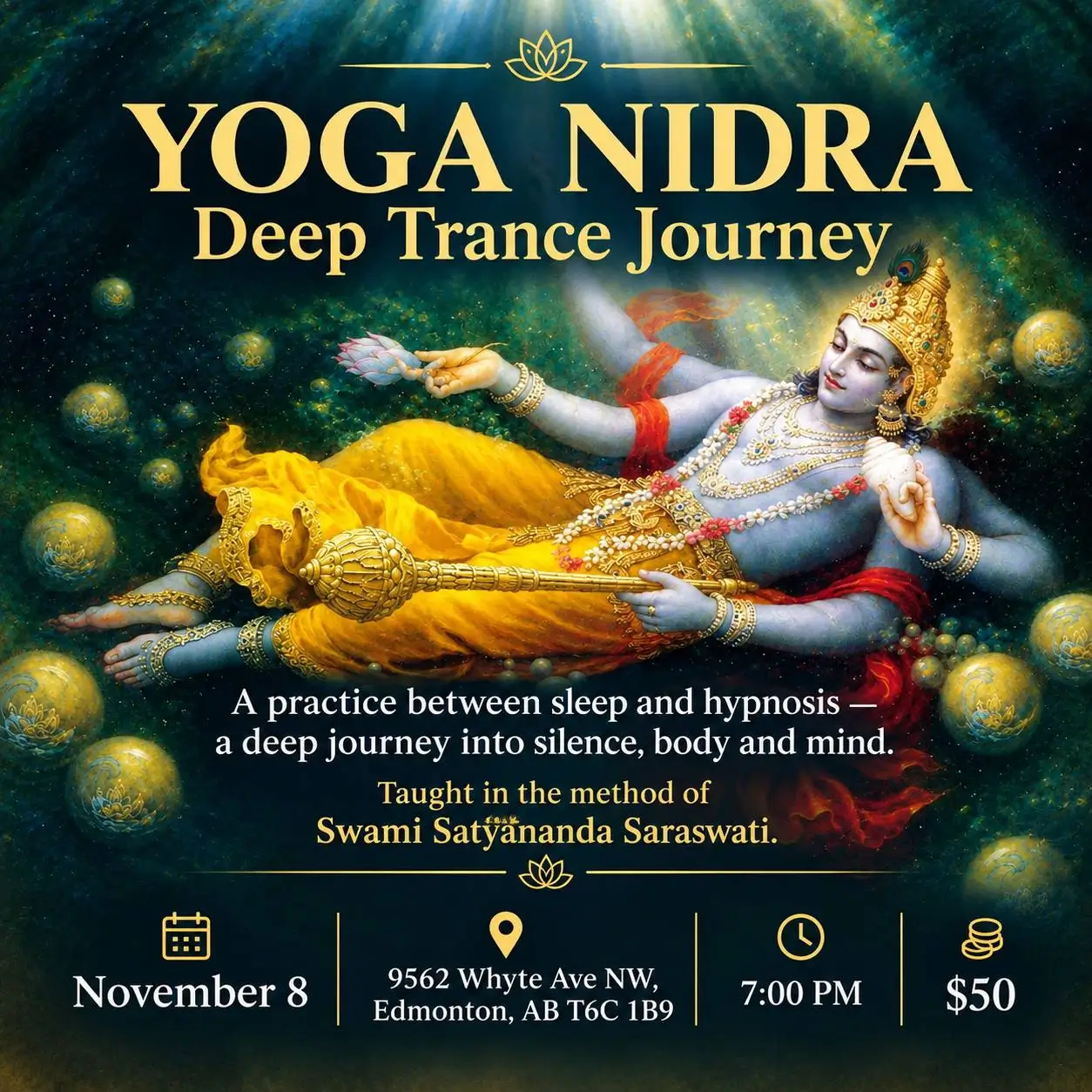
Edmonton, AB T6C 1B9
Yoga nidra in Edmonton on Whyte Avenue: a Sunday evening to close the week, in a quiet yoga studio, with time for questions after the practice.
lying down
needed
classical method
guided practice
What state is this
Between being awake and being asleep
What happens to a person when the body is almost asleep, the outside world slowly fades away, but the mind stays awake inside? Can we stay aware while deeply relaxed, right on the edge between waking and sleep? What happens to inner perception when the usual control of the mind lets go?
This is the state a yoga nidra session takes you to. Yoga nidra literally means "yogic sleep", but it is not ordinary sleep. In normal sleep the mind loses its direction and attention sinks fully into what happens inside. In yoga nidra the body moves into deep relaxation, close to sleep, while the mind keeps a certain level of awareness. The body resting, the outside world losing importance, the mind still watching: that combination is what makes this practice so interesting, and why it can never be fully understood from a description.
- A short preparation first: special exercises so the body can truly let go. Then you lie down, close your eyes and listen
- A guided journey through the body, the breath, the senses and the inner space of the mind
- The same state some fields call deep trance, others "non-sleep deep rest"; in yoga it has been called yoga nidra for centuries
The modern system of yoga nidra is closely connected to the name of Swami Satyananda Saraswati. In the ashram of his teacher, Swami Sivananda, in Rishikesh, he used to keep watch at night near a school where students studied Sanskrit. After his night shift he would fall asleep, and in the morning the students would begin chanting Vedic mantras. He never studied those texts and never tried to memorise them. Later, awake, when he heard the same mantras, he realised he knew them. Something he had never learned consciously had entered his mind while he slept.
That experience pushed him to study the nature of sleep, perception and awareness, and the idea that a person can take in information even while asleep. Ideas about yogic sleep are much older and appear in ancient yogic and tantric texts; Satyananda organised them into one clear, step-by-step practice, the yoga nidra taught in this class.
What happens in the session
A guided yoga nidra practice, step by step
During the practice attention moves through the body, the breath, the senses and the inner space of the mind, in the order Satyananda set out. The teacher's voice guides the whole way; you never have to remember what comes next.
Preparation & settling
Preparation matters: before lying down we do special exercises, gentle stretches and breathing, so the body can stay still without effort. Then, on your back under a blanket, eyes closed.
Sankalpa: inner intention
A short, positive resolve planted at the door of deep relaxation and repeated at the end, when the mind is most receptive.
Rotation of consciousness
Attention moves quickly through the body in a fixed sequence, part by part. You hear the name and feel the place, nothing more. By the end most people are already at the threshold.
Breath awareness
Watching and counting the natural breath keeps a thread of awareness alive exactly where the body wants to fall asleep.
Opposite feelings
Heaviness and lightness, heat and cold: the nervous system learns to move between states without resisting either.
Visualisation & the journey
Colours, sounds, memories, symbolic images and associations may appear. The sense of time may change; the edges of the body may become less clear. Or you simply fall asleep. Everyone's yoga nidra is their own.
Sankalpa again
The same resolve, with feeling, from inside the deepest part of the practice.
Slow return
Breath, weight, sounds in the room, small movements, and back. The return is never rushed; this is where the practice settles.
Questions & sharing
An unhurried close: a few words about what you noticed, if you want to share them, and questions to the teacher.
All of this is guided; you only lie still and listen. Reserve a place · $50 →
The shape of the evening
One evening, 7:00 to 9:00 PM
Times are approximate: the practice itself takes as long as it takes, and the evening always closes by 9:00 PM.
- Doors open, find your spot, set up your mat and blanket
- Introduction: what yoga nidra is, how the evening will go, how to lie so the body can let go
- Preparation: special exercises, gentle stretches and breathing, so the body can stay still and let go
- Yoga nidra: the full guided practice, about 45 minutes
- Slow return, sharing and questions
- Close
Doors open at 7:00 PM; please be settled by 7:15 PM so we can begin together. Once the practice has started the door stays closed, because a late arrival breaks the state for everyone in the room.
Why "deep trance journey"
Where yoga nidra meets what psychology knows about trance
How close are these states to what other fields of altered consciousness have studied? In psychology and hypnotherapy, Milton Erickson widely used trance states, working with conscious and unconscious processes, inner images, memories and a person's inner resources. Michael Newton studied the subjective experience of people in deep hypnotic trance and worked with regression.
Not hypnosis, not regression therapy
Yoga nidra is its own yogic practice with its own structure and aim. Nobody suggests anything to you and nobody leads you anywhere on purpose. But between these fields there is a shared area: a change in the usual nature of attention, and a move toward deeper inner perception.
What may surface, and how we treat it
Deep relaxation and a change in the state of attention may let memories, images and associations appear that are usually outside conscious awareness. Some people have experiences connected to past events or long-forgotten memories. Yoga nidra does not aim to cause this, and an image that appears is not automatically a literal memory or proof of anything. It is a subjective inner experience: something to observe and explore, without needing to explain it right away.
Nothing to force, nothing to achieve
You don't need to know beforehand what should happen, force yourself to see certain images, or try to reach a special state. The practice starts with something very simple: you lie down, close your eyes and start to listen. What matters is not what you should see or feel; what matters is the experience itself.
Two people take part
Yoga nidra is not something a teacher "does" to you
You could say it is 50/50. The teacher builds the structure and guides with the voice; the practitioner does the inner work. The teacher can create the conditions for going deeper, but how deep you go depends on your own ability to let go of outside activity, trust the process and stay attentive.
🗣️The teacher
- Builds the structure of the practice in the classical order
- Guides with the voice, sets the pace and the direction of attention
- Holds the room: warmth, quiet, timing, the slow return
- Cannot do the practice for you
🧘The practitioner
- Relaxes the body and lets outside activity go
- Follows the instructions without effort or analysis
- Keeps a thread of attention alive at the edge of sleep
- Observes their own experience, whatever it is
This is why yoga nidra can never be understood just from reading. You can read a lot about consciousness, the subconscious, hypnosis, trance and regression, but there is a huge difference between knowing about a state and living through it yourself.
Who the yoga nidra class is for
Anyone who can lie on the floor for 45 minutes. No experience in meditation, yoga or hypnosis.
You don't need to try to force yourself into any state. It is enough to come, get comfortable, close your eyes and let the practice happen. For some it will be deep relaxation; for others the sense of body and time will change; some will see inner images or memories; and for someone this may be the first time they feel the body resting as if asleep while the mind keeps watching.
🤍Most people come for
- Deep rest that a night of sleep or a 10-minute app session doesn't give
- Curiosity about the state itself: trance, the edge of sleep, what the mind does when control lets go
- A quieter nervous system after weeks of stress, overthinking or poor sleep
- A first taste before joining our one-day or three-day retreat, where yoga nidra is part of every afternoon
- Learning the sequence from a live voice so it can be practised at home afterwards
🎒What to bring
- Yoga mat (mats are not provided)
- Blanket: body temperature drops in deep relaxation
- Warm sweater and socks
- Eye mask or a scarf to cover the eyes
- Small pillow, if you like one under the head or knees (optional)
Not sure whether a yoga nidra session is right for you? Write to life@vipassana.ca or call +1 (647) 614-0707 and we'll tell you honestly. Ready to come? Choose your city →
Who is guiding it
A certified yoga nidra teacher in the Satyananda tradition
Both evenings, in Calgary and in Edmonton, are guided by Artem Rusinov, a certified yoga nidra teacher from the Satyananda Saraswati Institute. Artem teaches yoga nidra, Kriya yoga and Vipassana meditation at every retreat we run in Alberta, and this class is the practice on its own, in its full classical form, with time for a slow return and questions afterwards.
Reserve your place · $50
Register for the yoga nidra class
Choose your city. Places are limited by the floor space of the room, so that everyone can lie down with room around them.
Checkout not loading? Open registration on Eventbrite →
Registration opens shortly
Online checkout for the Edmonton yoga nidra session is being set up. Write to life@vipassana.ca and we'll hold a place for you and send the payment link as soon as it is live.
Checkout not loading? Open registration on Eventbrite →
Questions people ask first
Yoga nidra class FAQ
What is a yoga nidra class like?
You lie on your back on a mat, under a blanket, with your eyes closed, and the teacher guides you with the voice for about 45 minutes through the classical stages: settling, an inner intention (sankalpa), a rotation of attention through the body, breath awareness, opposite feelings, visualisation, the intention again and a slow return. Before the practice itself we prepare the body: special exercises, gentle stretches and breathing, because how deep you go depends on how completely the body can let go. The evening opens with a short introduction and closes with a slow return and questions; in total about two hours, from 7:00 to 9:00 PM.
Do I need any experience in yoga, meditation or hypnosis?
No. Yoga nidra is guided from the first word to the last, and nothing is expected of you except lying still and listening. Complete beginners and experienced meditators lie side by side in the same room, and each has their own experience.
What if I fall asleep?
Then you fall asleep, and that is fine. The practice aims at the threshold between waking and sleep, and on some evenings, or after a hard week, the body simply crosses it. Part of the practice still reaches you, and many people who "slept" come out more rested than after a full night. With repetition the thread of awareness gets stronger.
Is yoga nidra hypnosis?
No. Yoga nidra is a yogic practice with its own structure; nobody suggests anything to you and nobody leads you anywhere on purpose. What it shares with the trance states studied in hypnotherapy, from Milton Erickson to Michael Newton, is a change in the usual nature of attention and a move toward deeper inner perception. That shared ground is why we call the session a deep trance journey, and why it is not regression therapy.
I've heard people see images or old memories. Will that happen to me?
It may, and it may not. Deep relaxation can let images, memories and associations surface that are usually outside conscious awareness. If they come, the guidance is simply to observe them; an image that appears is not automatically a literal memory or proof of anything. If nothing comes, the practice is not less complete. Nobody is pushed toward any experience.
Who should be cautious?
Yoga nidra is one of the gentlest practices there is, but a few notes. If you have a history of trauma, tell the teacher before the class; the rotation and the opposites stage can be adapted, and you can keep the eyes open if you need to. In pregnancy, after the first trimester, lie on the left side with support rather than flat on the back; bring an extra pillow. If you are being treated for severe depression or psychosis, talk to your clinician first. And please don't drive straight after: give yourself ten minutes to come back fully before leaving.
What should I bring, and what is provided?
Bring your own yoga mat and a blanket; mats and blankets are not provided. Wear a warm sweater and socks, because body temperature drops in deep relaxation. An eye mask or scarf for the eyes helps, and a small pillow under the head or knees is optional. Water is a good idea; please have a light meal before you come rather than after.
Where does the yoga nidra class take place?
Calgary: Saturday, October 24, 2026, 7:00 PM, at the community centre at 489 Sienna Park Dr SW, Calgary, AB T3H 3T4. Edmonton: Sunday, November 8, 2026, 7:00 PM, at the yoga studio at 9562 Whyte Ave NW, Edmonton, AB T6C 1B9. Doors open at 7:00 PM for both; we begin at 7:15 PM.
How many people will be in the room?
A small group. The number of places is set by the floor space of each room so that everyone can lie down with space around them, and registration closes when the room is full.
What if I can't make it after registering?
Write to life@vipassana.ca as early as you can. Because places are limited we can usually move you to the other city's date or to the next session, or pass your place to a friend.
How is this different from your retreats and sound baths?
At our one-day and three-day retreats yoga nidra is one afternoon practice among sitting meditation, hatha yoga, Kriya yoga and sound. This class is yoga nidra on its own, unhurried, in the complete classical form, with room for the slow return and questions afterwards. A sound bath works through sound and vibration; yoga nidra works through guided attention and the voice. Many people do both.
Can I learn to practise yoga nidra at home after the class?
Yes; that is one of the reasons to come. Hearing the full sequence from a live voice is the fastest way to get it into memory, and after the class you will know the order well enough to guide yourself. Our guide to yoga nidra has the stages written out and a short version to practise from memory.
Still have a question? Write to life@vipassana.ca, or simply reserve a place →
Go deeper
Yoga nidra is part of every retreat we run
You lie down. You close your eyes. You start to listen.
And maybe, right then, you feel for the first time what it means to stay aware while the body is almost asleep.
Yoga Nidra: Deep Trance Journey · Calgary, Sat Oct 24 · Edmonton, Sun Nov 8 · 7:00 PM · $50
Questions? life@vipassana.ca · +1 (647) 614-0707
We're Here to Help
Have Questions?
We'd love to hear from you. If you have any questions about the Yoga Nidra class or would like to explore whether it's the right experience for you, don't hesitate to get in touch. We're happy to answer your questions and guide you every step of the way.
Other Events
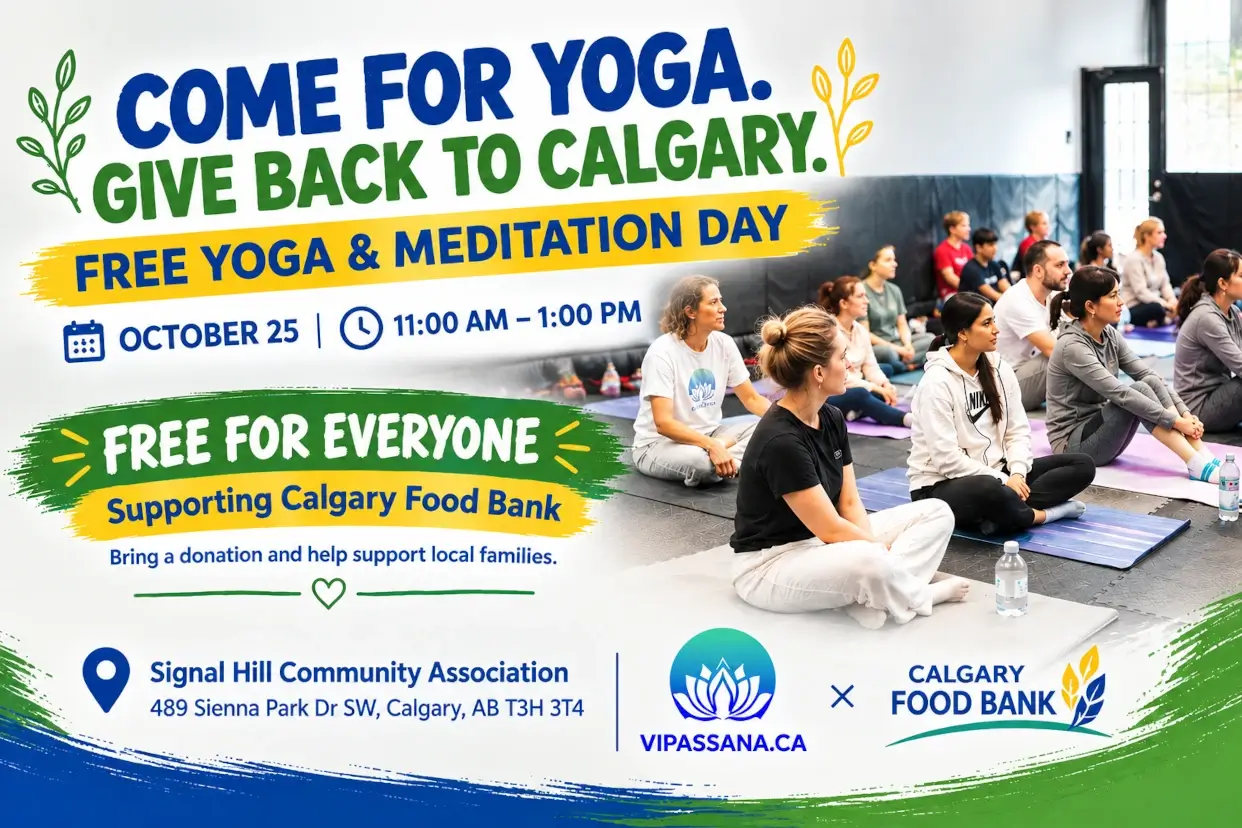
Free Yoga Day in Calgary
10 Days Vipassana Online